
Why "Clean Eating" Isn't the Same as Eating for Performance
Clean eating and eating for performance overlap a lot, until they don't. A look at where they diverge and what that means in practice.
 By Matt McCabeFebruary 3, 20268 min read/ Foundations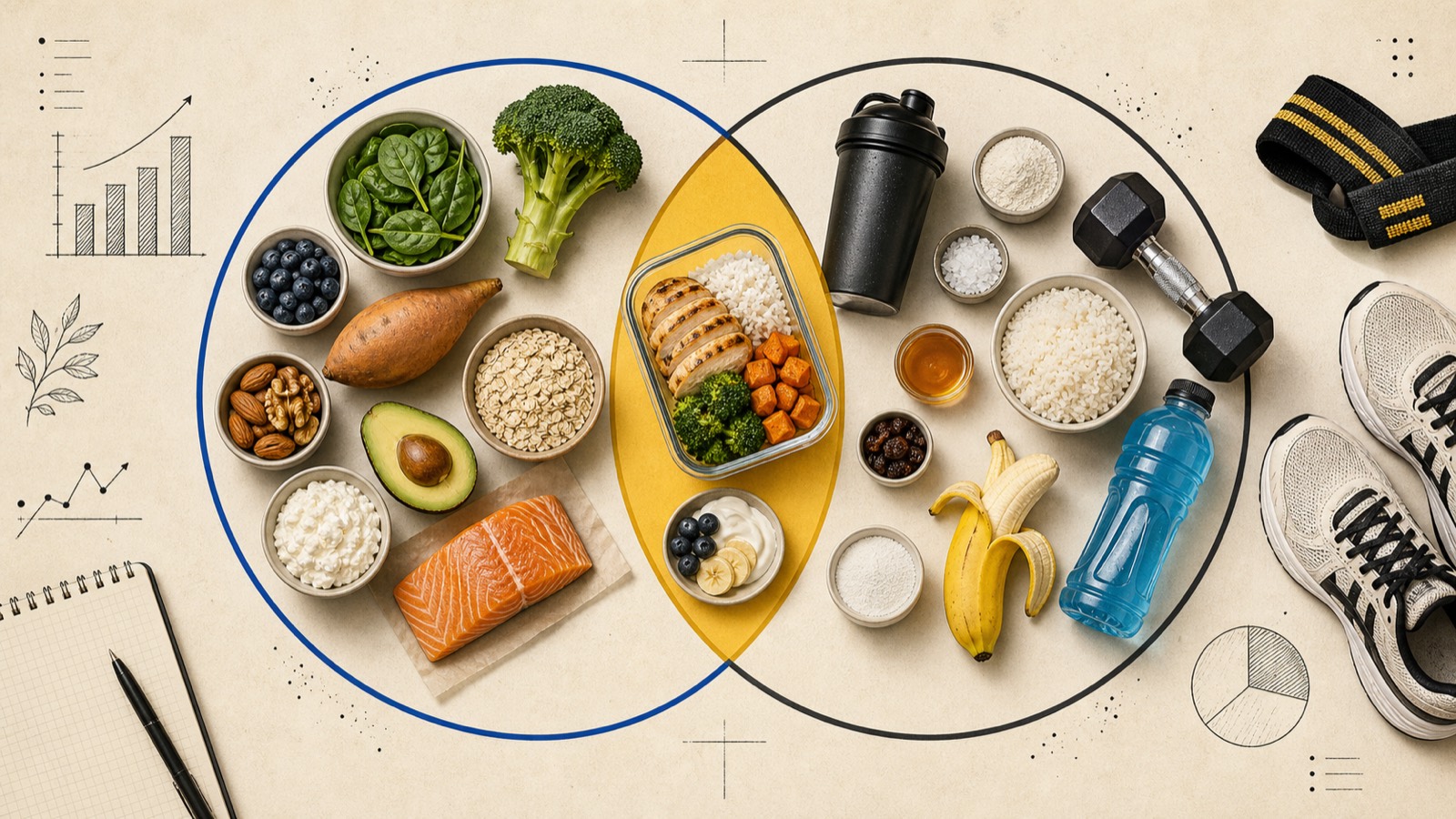
"Clean eating" sounds wholesome. Whole foods, no processed junk, plenty of vegetables, no artificial colors. The Instagram version is a beautifully-plated quinoa bowl with massaged kale, sliced avocado, and one suspiciously perfect cherry tomato.
Clean eating isn't bad. It's incomplete. Eating for performance is a different problem with overlapping but distinct constraints, and conflating them tends to cost results for people who train hard.
The common gap in "clean" plans for athletes
Most clean-eating templates I see have three structural issues for trained adults:
- Protein runs low. Clean menus skew heavy on vegetables, grains, and "healthy fats," and light on protein density. It's easy to spend a clean-eating day at 50 to 70g of protein, well under the 1.6 to 2.2 g/kg range the research supports for trained adults (Jäger et al., 2017; Morton et al., 2018).
- Carbs run low. Many clean plans treat carbs (especially white ones) as suspect. Hard training depletes glycogen. Cutting carbs too low usually shows up in lifting performance and recovery (Kerksick et al., 2017).
- Calories are unintentionally low. The food is nutrient dense, the plate looks generous, and the day still adds up to 1,400 calories. That's a problem for someone training 5 days a week.
What each is actually optimizing for
Clean eating generally optimizes for:
- Whole-food sources
- Micronutrient density
- Limiting heavily processed ingredients
- Limiting added sugar
- A sense of dietary virtue
Those aren't bad goals. The micronutrient and fiber piece is genuinely useful: the Reynolds et al. (2019) Lancet review found meaningful reductions in chronic disease risk with higher fiber intake and minimally processed carbohydrate quality. So clean eating's emphasis on whole foods earns its keep.
Performance eating generally optimizes for:
- Hitting daily protein consistently
- Total calories that match training demands
- Adequate carbs for the work being asked
- Recovery (sleep + food)
- Adherence over months and years
Notice "whole foods" isn't on the performance list. Not because processed food is great for you, but because the cleanness of the source isn't driving training adaptation. The macros and total intake are.
Where they overlap
For most adults, the highest-performing diet includes a lot of "clean" food by accident, because whole foods tend to be protein-dense and satiating. Grilled chicken, salmon, Greek yogurt, eggs, rice, oats, vegetables. All clean. All performance-friendly.
The conflict shows up at the edges. Specifically:
- A scoop of whey isn't "clean" in the Instagram sense, but it might be the difference between hitting 180g of protein and 130g.
- White rice isn't a "clean" carb, but it's an excellent pre-workout fuel and easy on the gut.
- Cereal isn't health food, but a bowl of cereal with milk and a scoop of protein after a hard session is reasonable recovery food.
- A protein shake at 9pm beats falling 40g short.
These are the moments where strict "clean" preferences can cost results. The shake gets skipped, the rice gets replaced, the cereal gets banned, and performance pays the bill.
Clean food and performance food are two different jobs. You can do both, and you can also do neither, and a plate of organic quinoa will look about the same in either case.
What this looks like on a plate
Here's the gap in numbers. A "clean" day might be oatmeal with berries at breakfast, a big kale-and-quinoa salad with a little chicken at lunch, and salmon with roasted vegetables and a sweet potato at dinner. Every choice is defensible. Add it up and you might land near 1,500 calories and 95g of protein. For someone lifting four or five times a week, that's a recovery problem hiding inside a wholesome plate.
Now fix it without making it "dirty." Double the chicken at lunch and add a cup of white rice. Stir a scoop of whey into Greek yogurt as an afternoon snack. Keep the salmon, add more rice. Same kinds of food, but now you're near 2,100 calories and 175g of protein, with carbs sitting where your training can use them. Nothing on that plate is junk. The only thing that changed is that performance got a vote.
There's a fair point buried in the clean-eating instinct, and it's worth naming. In a tightly controlled inpatient trial, people eating an ultra-processed diet ate about 500 calories a day more than the same people on a minimally processed one, even though the two diets were matched for protein, carbs, fat, sugar, and fiber (Hall et al., 2019). So heavily processed food can quietly push intake up. For a hard-training athlete, though, the more common failure runs the other direction: clean rules cut protein and calories too low, and recovery is what pays. Both can be true. Knowing which one is biting you is the whole game.
An 80/20 frame that works for most people
About 80% of the food can come from whole-food sources you'd recognize as clean: protein, vegetables, fruit, dairy, grains. The other 20% can include things that close gaps or make the diet sustainable (protein powder, white rice, the occasional bowl of cereal). This is roughly the IOC consensus framing on performance nutrition for athletes (Maughan et al., 2018), softened for a general audience.
That isn't license for chaos. It's an honest acknowledgment that hitting your numbers matters more than where every gram came from. A diet that's 100% clean and 70% adherent loses to one that's 80% clean and 95% adherent.
If this sounds familiar, here's the fix
- Audit your protein. Track honestly for a week. If you're not consistently near 0.7 to 1.0g per pound of bodyweight, you're not eating like an athlete, regardless of how clean the food is. The macro calculator is a fine starting point for the number, not an exact prescription.
- Add carbs around training. If you've been carb-shy, deliberately add 50 to 80g of carbs to a pre- or post-workout meal for two weeks. Watch what happens to training quality.
- Stop banning categories. Banning specific foods on principle is the same move that trips up most fad diets, and it leaves you struggling to hit your numbers consistently. Bring back the things you ruled out for reasons of vibe rather than data.
The simple version
Clean eating and performance eating overlap a lot. The places they diverge are where most "I eat so clean and still can't recover" problems live. Eat clean when it lines up. Eat for performance always.
For information and education, not medical advice. If you have a health condition, are pregnant, or take medication that interacts with diet, talk to a clinician before making changes.
End of note
Subscribe
Get the next Field Note by email
A short email when a new article or recipe ships. No spam, no upsell, unsubscribe in one click.